Dealing with Fly-Tipped Loads on Stockwell Park Road: a Practical Local Guide
Fly-tipping is never just an eyesore. On a street like Stockwell Park Road, it can block access, attract more dumping, create safety hazards, and leave residents feeling stuck with a problem they never caused. If you are dealing with fly-tipped loads on Stockwell Park Road, the real question is usually simple: what should you do first, who is responsible, and how do you get it cleared without making the situation worse?
This guide walks through the practical side of dealing with abandoned waste in a busy South London setting. We'll cover how fly-tipped loads are handled, why swift action matters, what to avoid, and how to choose the right next step depending on the size, type, and location of the waste. You'll also find a checklist, a comparison of common approaches, and a realistic example to help you make sense of it all. Truth be told, the best approach is often the calm one.
Table of Contents
- Why Dealing with Fly-Tipped Loads on Stockwell Park Road Matters
- How Dealing with Fly-Tipped Loads on Stockwell Park Road Works
- Key Benefits and Practical Advantages
- Who This Is For and When It Makes Sense
- Step-by-Step Guidance
- Expert Tips for Better Results
- Common Mistakes to Avoid
- Tools, Resources and Recommendations
- Law, Compliance, Standards, or Best Practice
- Options, Methods, or Comparison Table
- Case Study or Real-World Example
- Practical Checklist
- Conclusion
- Frequently Asked Questions
Why Dealing with Fly-Tipped Loads on Stockwell Park Road Matters
Fly-tipped waste is more than rubbish left in the wrong place. On a road with a mix of homes, parked cars, foot traffic, and everyday deliveries, a dumped load can quickly become a nuisance with ripple effects. Bags tear open. Sharp edges show. Rain gets in. Then the smell starts, and a small pile becomes a bigger problem by the hour.
For local residents, the concern is often immediate. Can you safely pass the waste? Will it spill into the pavement? Has anything hazardous been left behind? For landlords, managing agents, and businesses nearby, there is also the reputational side. A visible fly-tip can make a property look neglected, even if the waste appeared overnight.
There is a wider community issue too. Fly-tipping tends to signal that an area is easy to target. The quicker the waste is dealt with, the less chance there is of more being added. That is not theory; in practice, a single mattress or builder's bag can become the magnet for another two or three items if it sits there too long. It happens.
If you are already thinking about wider waste management in the area, it may also help to look at related local services such as house clearance in London or rubbish removal across London, especially where the dumped load appears to come from a move, a clear-out, or renovation work. Different waste situations need different handling, and that distinction matters.
Expert summary: The fastest way to reduce the damage from fly-tipped loads is to identify what was dumped, secure the area if needed, and choose a removal route that is safe, legal, and appropriate for the waste type. Simple in theory. A bit less simple on the pavement.
How Dealing with Fly-Tipped Loads on Stockwell Park Road Works
In practical terms, dealing with fly-tipped loads usually follows a fairly predictable pattern. First comes identification: what is it, how much is there, and is it dangerous? Then comes reporting or arranging removal. After that, the waste should be removed, transported, and disposed of through the proper channels.
Not every pile is the same. A few black bags dumped beside a wall are one thing. A mixed load of old furniture, plasterboard, building rubble, and paint tins is another. A bag of household rubbish might be annoying; a load containing broken glass, chemicals, or sharps is something you need to treat with more caution. You do not have to become an expert overnight, but you do need to avoid assumptions.
There is also the practical question of location. If the waste is on private land, the person responsible for that land usually has to organise removal. If it is on the public highway or pavement, the local authority may have a role, though response times and procedures can vary. If you are unsure, take a few photos, note the time, and record where the waste is sitting. Small details help a lot later. Strange as it sounds, a quick phone photo can save a lot of back-and-forth.
For larger clearances, many people also want to coordinate other waste-related needs in one visit. For example, if the fly-tip includes bulky items left after a tenant move, you may need to combine removal with bulky item collection in London or even a broader flat clearance service. That can be more efficient than handling each item separately.
What usually happens behind the scenes
- The waste is assessed for type, size, and safety risk.
- Any obvious hazards are flagged before removal begins.
- The load is separated if needed for recycling or specialist disposal.
- Legal transport and disposal arrangements are used.
- The area is left tidy, and any remaining debris is cleared.
The important thing is not to rush straight in and drag everything into the nearest vehicle. That is where avoidable problems start.
Key Benefits and Practical Advantages
Clearing fly-tipped loads promptly is not just about making the street look better, although that does matter. There are several practical advantages that are easy to overlook until you have dealt with a messy one yourself.
1. It reduces secondary dumping
Open waste piles tend to attract more waste. People see a place that already looks neglected and think they can add to it. Prompt removal helps break that pattern.
2. It lowers the risk of injury or contamination
Broken glass, nails, syringes, rotting food, wet cardboard, spoiled liquids, and sharp metal all create hazards. Even if the load looks harmless at first glance, there may be something hidden in the middle. That is where a careful approach pays off.
3. It protects property and access
Fly-tipped loads can block driveways, access routes, bin store areas, and communal entrances. On a road with regular pedestrian movement, that can become a real annoyance fast.
4. It supports a cleaner local environment
Residents notice when rubbish is left too long. So do visitors and tenants. A cleaner frontage helps maintain a more respectable feel across the street, which matters more than people sometimes admit.
5. It helps with compliance and liability management
Using a proper removal route, especially for mixed or potentially hazardous waste, reduces the risk of accidental non-compliance. That is especially relevant for landlords, managing agents, and businesses with duty-of-care responsibilities.
To be fair, the biggest advantage is often peace of mind. Once the load is gone and the area is tidy again, the problem stops living rent-free in your head.
Who This Is For and When It Makes Sense
This topic is relevant to a fairly wide group of people, and that is part of why it is worth explaining properly. Fly-tipped waste is one of those messy local problems that does not respect job titles.
Residents
If you live near Stockwell Park Road and find dumped waste near your home, you may need to decide whether to report it, secure the space, or arrange removal. It can be especially frustrating when the waste is close to communal entrances or shared bins.
Landlords and letting agents
End-of-tenancy clear-outs can uncover hidden dumping around side returns, rear access points, or yards. If the waste is associated with an empty property, timing matters. Leaving it too long can invite more rubbish, and then the job gets bigger. Much bigger.
Property managers and freeholders
Managing a building on or near a busy local road means keeping common areas usable and presentable. Fly-tipping near entrances, bin stores, or service yards often needs a coordinated response.
Small businesses
Shops, offices, cafes, and workshops can all be affected. A dumped load outside your premises can affect footfall, customer confidence, and deliveries. If the waste appears after hours, first thing in the morning can be an unwelcome surprise.
Anyone planning a clear-out
If you are already dealing with removal of bulky, awkward, or mixed household items, it makes sense to ask whether a broader clearance service is more efficient than trying to tackle everything piecemeal. That is where services like office clearance in London or garage clearance for London properties may be useful, depending on what has actually been dumped.
In short: if the waste is too large, too mixed, too risky, or too awkward to handle safely, it makes sense to step back and get the right support.
Step-by-Step Guidance
Here is a sensible, practical way to deal with a fly-tipped load without turning a bad day into a worse one.
- Look first, lift later. Check what has been dumped before touching anything. Look for broken glass, needles, liquids, paint, batteries, plasterboard, or anything that smells chemical or rotten.
- Take clear photos. Snap the pile from a few angles. Include nearby landmarks if possible. This helps with reporting and record-keeping.
- Note the location and time. Write down exactly where it is and when you noticed it. In a street environment, those details are surprisingly useful.
- Separate obvious hazards. If there are sharps, chemicals, or unknown substances, do not handle them casually. Keep children and pets away. Sensible, but worth saying.
- Decide whether it is public or private land. This affects who is likely to be responsible for the next step.
- Arrange the right removal route. If the waste is a mixed load or too bulky for a normal bin collection, a dedicated clearance is usually the cleaner option.
- Ask about sorting and disposal. Good providers will separate recyclable material where possible and dispose of waste through lawful channels.
- Check the area after removal. Make sure smaller debris, nails, or residue have been cleared, not just the main pile.
If you are coordinating a larger clean-up, consider whether the dumped items form part of a wider clearance issue. Sometimes the fly-tip is not the whole story; it is the visible bit of a bigger storage or move-out problem. That is where a service such as end-of-tenancy clearance can make more sense than a one-off tip removal alone.
A small but important note on safety
If a load includes anything that looks contaminated or hazardous, do not improvise. A quick tidy-up is good. A DIY scramble with no gloves and a bag from the kitchen drawer? Not so good, really.
Expert Tips for Better Results
Once you have dealt with a few of these jobs, a pattern emerges. The smoothest outcomes usually come from preparation, not force.
Tip 1: Sort before you move
Even a rough sort makes a big difference. Wood, cardboard, furniture, bagged household waste, and rubble often need different handling. Mixing everything together can make disposal slower and more expensive.
Tip 2: Watch for hidden weight
A sofa is rarely just a sofa. It may contain soaked fabric, damp timber, and hidden debris. Builders' bags are another classic trap; they look manageable until you try to lift one and realise it has been filled with rubble, soil, and broken tile.
Tip 3: Photograph before and after
Good records help if you need to show that the waste was handled properly, or if a recurring dumping issue needs to be reported again. It is not glamorous, but it is useful.
Tip 4: Don't assume everything is recyclable the same way
Some materials that look similar need different disposal routes. Timber, metal, plasterboard, green waste, and general mixed rubbish are not interchangeable. A proper clearance approach separates them where possible.
Tip 5: Plan around traffic and access
On a road like Stockwell Park Road, timing matters. Early mornings, school-run periods, delivery windows, and parking pressure can all affect how smoothly waste can be removed. A tidy job is often a timed job.
And yes, sometimes the best tip is the boring one: use people who actually know what they are doing.
Common Mistakes to Avoid
Fly-tipped loads create a bit of urgency, which is exactly when bad decisions creep in. These are the mistakes we see most often, and they are avoidable.
- Touching unknown waste without checking first. Hidden sharps or liquids can turn a simple clear-up into a safety issue.
- Using the wrong removal route. A domestic waste collection is not always suitable for mixed fly-tip materials or bulky items.
- Leaving the area partially cleared. Small leftover fragments can still create complaints and hazards.
- Assuming the dump will disappear on its own. It usually gets worse, not better.
- Not documenting what was found. This can make reporting or follow-up harder than it needs to be.
- Mixing compliant and non-compliant disposal. If waste is collected without proper handling, you can end up with a second problem you never wanted.
One more thing: do not leave bags near the pile thinking they are "sorted enough for later." Later has a way of becoming tomorrow, then next week. The wind, the rain, and the foxes do not help either.
Tools, Resources and Recommendations
You do not need a van full of specialist equipment for every situation, but a few basic tools and habits make fly-tip handling much easier.
Useful items to have
- Heavy-duty gloves
- Sturdy boots with good grip
- Refuse sacks or rubble sacks suitable for the material
- A torch for checking dark corners or under items
- A phone camera for documentation
- A dust mask where dusty or mouldy material is involved
Recommended approach
If the waste is small, straightforward, and safe, a local collection may be enough. If it is mixed, bulky, or awkward, a more structured service is usually the better fit. In some cases, people also need ongoing support with repeat waste issues, for example where a shared yard or access route keeps being used as a dumping spot. That is where a broader service conversation can help, including commercial waste collection in London or general waste clearance depending on the setting.
What to ask any provider
- How do you handle mixed loads?
- Can you remove bulky and awkward items together?
- Do you sort recyclable material where possible?
- How do you handle potentially hazardous items?
- Will the area be left clean after removal?
If you are comparing options, it is also sensible to ask whether the provider handles specialist clearances such as shed clearance or furniture disposal, since fly-tipped loads often contain exactly those awkward items. One job leads to another, as anyone who has done a proper yard clear will tell you.
Law, Compliance, Standards, or Best Practice
Fly-tipping is not just a cleanliness issue; it is a compliance issue too. While the exact legal responsibilities can depend on where the waste is located and who owns the land, the general principle is straightforward: waste should be handled responsibly, transported correctly, and disposed of through legitimate routes.
For residents and property owners, best practice usually means not moving waste in a way that creates risk, not handing it to someone without checking they are operating properly, and keeping some record of what was removed. For landlords, managing agents, and businesses, there is also a duty-of-care mindset: if waste is generated on your premises or associated with your operations, it should be managed in a way that avoids unlawful disposal.
It is also sensible to distinguish between rubbish, bulky waste, and potentially hazardous waste. Not everything can go into the same vehicle, and not every item can be treated as standard domestic rubbish. Paints, solvents, batteries, electrical items, sharp objects, and contaminated materials often need extra care.
Best practice is usually simple in concept:
- Identify the waste type before moving it.
- Use suitable equipment and protective gear.
- Keep records of what was removed, especially for larger loads.
- Separate recyclable and non-recyclable materials where practical.
- Use lawful disposal routes only.
Not every clearance job needs a formal deep dive into compliance, but some do. If the load contains business waste, renovation debris, or items that could be classed as hazardous, the standards go up very quickly. Better to be cautious now than explain things later.
Options, Methods, or Comparison Table
Different fly-tip situations call for different responses. Here is a straightforward comparison to help you judge the best route.
| Option | Best For | Pros | Limitations |
|---|---|---|---|
| Report and wait for council action | Waste on public land where reporting is appropriate | No direct handling needed; suitable for some roadside cases | Timing may vary; not ideal for urgent access issues |
| Small self-clear with care | Minor, safe, non-hazardous waste on private land | Quick for very small jobs | Not suitable for mixed, heavy, or risky waste |
| Dedicated rubbish removal | Bulky, mixed, or awkward loads | Faster, safer, more convenient | May cost more than a basic bin solution |
| Full clearance service | Larger or repeated dumping issues | Good for complex, multi-item, or recurring problems | Can be overkill for a tiny pile |
As a rule of thumb, if you are asking whether the load is "a bit too much for us," that usually means it probably is. Better to choose the safer method than wrestle with it and regret everything by lunchtime.
Case Study or Real-World Example
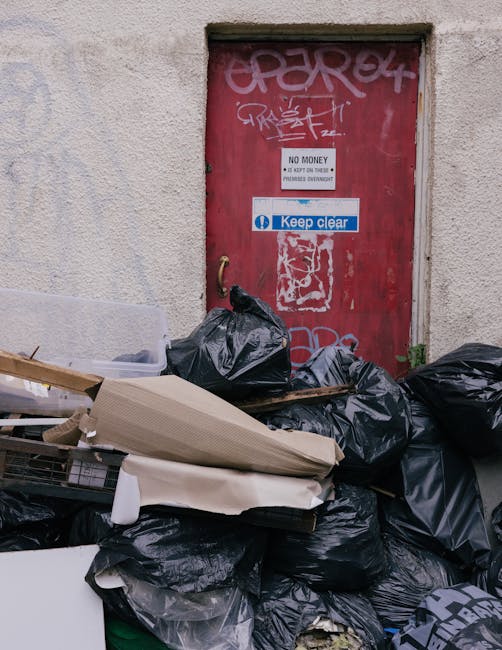
Picture a typical morning near Stockwell Park Road. A resident opens the blinds and sees a mixed pile left against the wall: two black bags, a broken chest of drawers, some packaging, and a paint tin that has leaked slightly onto the pavement. Not dramatic, but not trivial either.
At first glance, it looks like a straightforward tidy-up. Then you notice one bag is split, the paint tin is still damp, and there is shattered glass under the drawer unit. That is the point where rushing in would be a mistake.
The sensible response is to document the load, keep people away from the area, and arrange a proper removal method. Because the waste is mixed, bulky, and potentially messy, a simple bin collection would not be appropriate. A specialist clearance is more likely to deal with the items safely, separate reusable or recyclable material where possible, and leave the pavement clean rather than half-sorted.
What changes the outcome here is not just speed. It is choosing the right level of response. The resident gets the area back. The risk goes down. And, importantly, the load does not sit there all weekend becoming a bigger nuisance.
That's the real lesson. Most fly-tip issues are manageable if you treat them early and sensibly.
Practical Checklist
Use this checklist if you are dealing with fly-tipped loads on Stockwell Park Road and want a calm, structured approach.
- Take photos of the waste from more than one angle.
- Check for sharp, wet, chemical, or otherwise hazardous items.
- Keep children, pets, and passers-by away from the load.
- Note the exact location and time noticed.
- Decide whether the waste is on private land or public space.
- Identify whether the load is mixed, bulky, or specialist in nature.
- Choose the right removal method rather than the quickest-looking one.
- Ask how the waste will be sorted and disposed of.
- Check the area after removal for small debris.
- Consider whether recurring dumping needs a longer-term fix.
If the same spot keeps being targeted, that is a clue. Often the real issue is not the one-off dump, but access, visibility, or an underlying waste management gap nearby.
Conclusion
Dealing with fly-tipped loads on Stockwell Park Road is really about three things: safety, speed, and using the right removal approach. When a dump appears, it is tempting to focus only on getting rid of it fast. Fair enough. But the better result comes from looking at the waste properly, understanding the risks, and choosing a solution that actually fits the situation.
Whether you are a resident facing an ugly roadside pile, a landlord tidying up after a property issue, or a business trying to restore access and presentation, the same principle applies. Handle it carefully, document what you can, and don't let a small pile turn into a bigger headache. That bit matters more than people think.
Get a free quote today and see how much you can save.
And if the street looks a little better by the end of the day, well, that's one of those quiet wins that makes a neighbourhood feel more like itself again.
Frequently Asked Questions
What should I do first if I find fly-tipped waste on Stockwell Park Road?
Start by checking whether the waste looks hazardous, then take photos and note the exact location. If it is unsafe to touch, keep clear and arrange the next step without handling it yourself.
Can I remove fly-tipped loads myself?
Only if the waste is small, safe, and non-hazardous, and you have the right gear. Mixed loads, sharp objects, chemicals, or heavy items are better handled through a proper clearance route.
Who is responsible for fly-tipped waste on public land?
Responsibility can depend on the location and local arrangements, but public land issues are often reported for official action. If you are unsure, document the waste first and then decide the next step.
How do I know if a dumped load is hazardous?
Look for things like paint tins, chemical smells, leaking liquids, sharps, batteries, mouldy material, or broken glass. If anything seems questionable, treat it carefully and avoid direct contact.
Is fly-tipped waste the same as regular rubbish removal?
Not always. Fly-tipped loads are often mixed, abandoned, and awkward to sort. Regular rubbish removal may work for simple waste, but bulky or messy fly-tips usually need a more structured service.
How long should I leave a fly-tip before arranging removal?
Ideally, not long at all. The longer it stays, the more likely it is to attract more dumping, create odour, or become harder to clear safely.
What information helps when reporting fly-tipped waste?
Photos, a clear location, the time it was noticed, and a brief description of the items are usually the most helpful details. A quick note about any obvious hazard is useful too.
Can fly-tipped loads contain recyclable material?
Yes, often they do. Mixed dumps can include cardboard, metal, timber, and other recyclable items. The challenge is separating them safely and properly before disposal.
What if the waste is on private property?
If the load is on private land, the landowner or responsible occupier usually needs to arrange removal. That is why it helps to confirm exactly where the waste sits before taking action.
Will a clearance service tidy the area after removing the waste?
A good service should do more than just take the main items away. The area should be left clear of loose debris where reasonably possible, because stray shards and scraps are still a problem.
How much does fly-tip removal cost?
Costs vary depending on volume, access, item type, and whether any specialist handling is required. A small load will usually differ a lot from a mixed or bulky clearance, so it is best to request a tailored quote.
What if fly-tipping keeps happening in the same place?
Recurring dumping usually means there is an underlying issue such as easy access, poor visibility, or a location being used repeatedly. In that case, removal alone may not be enough and a longer-term prevention plan makes sense.