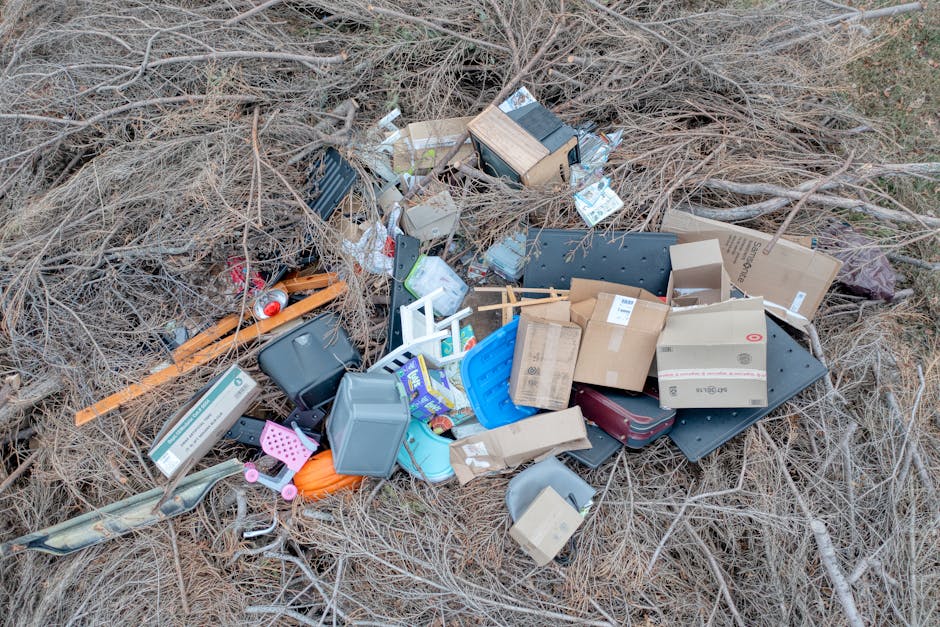
Lambeth Council Fines for Illegal Dumping in Stockwell: What Residents and Businesses Need to Know
If you live or work in Stockwell, fly-tipping is not just a messy nuisance. It can quickly turn into a costly problem, especially when Lambeth Council gets involved. Understanding Lambeth Council Fines for Illegal Dumping in Stockwell matters whether you are a landlord, a tenant, a shop owner, a builder, or simply someone trying to clear out a flat without causing trouble. The rules can feel a bit blunt, but the logic behind them is simple enough: waste must be handled properly, and if it is dumped illegally, someone can be held responsible.
This guide explains how fines work, why they are issued, what counts as illegal dumping, and what to do instead if you need a legitimate disposal route. We will also look at practical ways to avoid problems, a few real-world scenarios that people in London run into all the time, and where proper clearance options fit into the picture. Truth be told, most people do not set out to break the rules. They just get caught out by a missed detail, a dodgy trader, or the old classic: "I thought someone else would take care of it."
Key takeaway: if waste is left on a street, pavement, alley, verge, or communal area without permission, it can be treated as illegal dumping. The safest approach is always to use a proper, traceable waste collection service and keep records.
- Why it matters
- How the fines process works
- Benefits of getting it right
- Who this applies to
- Step-by-step guidance
- Expert tips
- Common mistakes to avoid
- Tools and resources
- Law and best practice
- Options and comparison
- Real-world example
- Checklist
- Conclusion
- Frequently asked questions
Why Lambeth Council Fines for Illegal Dumping in Stockwell Matters
Illegal dumping affects Stockwell in ways that go beyond the visual mess. A pile of black sacks, broken furniture, or builders' rubble left beside a row of terraces can block pavements, attract pests, create smells, and make an area feel neglected. On a wet London morning, that smell can be especially unpleasant. Not glamorous, but very real.
For households, the risk is often financial. A single mistake can lead to a fixed penalty or further enforcement action if the council believes there has been a deliberate disposal issue. For businesses, the stakes are even higher because waste generated by trade activity comes with a duty of care. If rubbish from an office refit or shop clear-out ends up dumped nearby, the business may need to explain where it came from and who handled it.
There is also the wider community issue. Fly-tipping often encourages more of the same. One dumped mattress can quickly become a mini rubbish corner. In busy parts of Stockwell, that can mean repeated clean-ups, extra council costs, and frustrated neighbours. Nobody wants to wake up to that on a Monday.
To be fair, some people only realise the seriousness when they receive a warning notice or see enforcement officers in the area. By that point, it is already too late to treat waste disposal casually. The better move is prevention: know what counts as illegal dumping, keep proof of collection, and use a reputable disposal route from the start.
How Lambeth Council Fines for Illegal Dumping in Stockwell Works
In plain English, the council investigates waste that appears to have been dumped unlawfully. That can happen after a resident report, a street inspection, CCTV evidence, or a follow-up to a visible pile of rubbish. Officers may look for names, addresses, invoices, labels, packaging, or any other clue that links the waste back to a person or business.
If the council believes someone has illegally dumped waste, a fixed penalty notice may be issued. In some cases, the matter can go further depending on the circumstances, the amount of waste involved, and whether the issue appears accidental, careless, or deliberate. The important thing is that the authority does not need the waste to be huge for a problem to arise. Even a small item left in the wrong place can still count.
Here is where people often get caught out:
- Leaving bags outside a property before arranged collection without clear permission
- Handing waste to an unlicensed or poorly run collector
- Putting trade waste in residential bins
- Dumping items beside communal bins when the bin area is already full
- Assuming a local shortcut or alley is "fine if it is out of the way"
If waste comes from your property, your business, or someone acting for you, you may still need to show how it was managed. That is why invoices, collection notes, and contractor details matter. They are boring bits of paperwork, yes, but they can be the difference between a smooth explanation and an awkward conversation.
For people who want to avoid that risk altogether, a proper collection service is the simplest route. Services such as waste removal or targeted clearances like house clearance and flat clearance make it easier to clear items responsibly instead of leaving them in a grey area.
Key Benefits and Practical Advantages
At first glance, avoiding a fine sounds like the only benefit. It is not. When waste is handled properly, you get a few practical wins that are easy to overlook until you have experienced the alternative.
- Less risk of enforcement action: the main one, obviously.
- Cleaner streets and shared areas: which helps relationships with neighbours and landlords.
- Better traceability: you can prove where the waste went if anyone asks.
- Less stress: no wondering whether a pile of rubbish will come back to haunt you.
- Faster project turnaround: particularly useful during moves, refurbishments, or office changes.
There is also a less obvious benefit: good waste handling can make a business look organised. A tidy site suggests care, and in a place like Stockwell where space is tight and activity is constant, that matters. If you are managing a workspace, a shopfit, or an emptying project, keeping things under control is a small detail that quietly signals professionalism.
For property owners and landlords, the value is even clearer. A messy void period can turn into complaints fast. If you are planning a wider clearance, it may be worth reviewing options like office clearance, furniture clearance, or even home clearance depending on the type of waste involved.
Who This Is For and When It Makes Sense
This topic is not just for people who have already received a notice. It is for anyone who creates waste in Stockwell and wants to avoid trouble.
Homeowners and tenants
If you are clearing a loft, sorting an inherited property, or replacing furniture, you need a proper disposal plan. Leaving items beside a bin because they are "almost collected" is a common way to create a problem.
Landlords and letting agents
End-of-tenancy clearances can be messy. Old mattresses, broken blinds, and leftover boxes can pile up quickly. If a property needs a full reset, options like loft clearance, garage clearance, or house clearance can help keep the process lawful and organised.
Businesses and offices
Trade waste, office furniture, packaging, and refurbishment debris need to be handled carefully. Businesses should pay special attention because the expectations around traceability and duty of care are stronger. If your workplace is having desks, chairs, or cabinets removed, a service like business waste removal is often the cleaner choice.
Builders and contractors
Construction waste is a frequent source of fly-tipping disputes. Bags of plasterboard, timber, tiles, and rubble cannot simply be left by the kerb and hoped away. For this sort of work, builders waste clearance is usually the more appropriate route.
When does this guidance really matter? Whenever waste is leaving your control. That is the moment to slow down and make sure the handover is legitimate. It sounds basic, but that is where a lot of people slip.
Step-by-Step Guidance
If you want to stay on the right side of Lambeth Council fines in Stockwell, use a simple process. Nothing fancy. Just sensible.
- Identify the waste correctly. Is it household rubbish, old furniture, garden waste, office items, or construction debris? Different types of waste call for different handling.
- Separate reusable and recyclable items. This cuts down what needs to be disposed of and usually makes the job easier.
- Check access and collection logistics. Tight stairwells, narrow front gardens, or shared entrances can all affect how waste should be removed.
- Choose a legitimate disposal route. Use a contractor or service that can explain how the waste will be collected and handled.
- Keep records. Save invoices, booking details, and any collection confirmation. If anything is queried later, you will want proof.
- Do not leave waste unattended in public spaces. Even if you believe collection is imminent, the council or neighbours may see it very differently.
- Follow up after collection. Make sure everything has been removed and nothing was left behind in a shared area or on the pavement.
A small real-world example: a family clearing a flat in Stockwell after a move might place a wardrobe, a broken chair, and several bags on the street "just for the afternoon". Then the van is delayed, the weather turns, and by evening the pile looks like it has been there for days. That is the kind of situation that can spiral. Better to schedule the collection properly and avoid the drama entirely.
Expert Tips for Better Results
There are a few habits that make a big difference, especially in a busy London area where waste can disappear into the wrong hands quickly.
- Book removal before you start clearing. It prevents the pile-up problem. Once stuff is on the floor, it tends to stay there longer than planned.
- Ask how items will be sorted. A responsible service should separate recyclable material where possible.
- Keep shared spaces tidy during the process. In blocks of flats, one messy hallway can create complaints fast.
- Use the right service for the job. A sofa, a load of green cuttings, and office chairs are not all the same kind of waste.
- Document anything unusual. If waste was left by someone else, photograph it before moving it, if safe to do so.
One useful habit many people skip: take a quick phone photo of the waste before collection and another after. It takes thirty seconds. Handy, boring, effective. Exactly the sort of thing that helps if anyone later says, "That pile was yours, wasn't it?"
If sustainability matters to you, look for clear providers with recycling-focused handling. The page on recycling and sustainability is a useful reminder that proper disposal is not only about compliance; it is also about reducing landfill where possible.
Common Mistakes to Avoid
Most fines and disputes come from familiar mistakes. The frustrating part is that they are usually avoidable.
- Assuming street space is free storage: it is not.
- Hiring someone without asking what happens to the waste: if they cannot explain it clearly, that is a warning sign.
- Mixing household and trade waste: this makes traceability harder and can create compliance issues.
- Leaving items outside after dark: this can attract opportunistic dumping by others.
- Trusting a cheap verbal promise: if it sounds too easy, it often is.
Another common error is thinking that "someone else will probably move it." That is a dangerous assumption. Councils tend to work from evidence, not assumptions, and the person connected to the waste may need to explain how it got there. Not ideal at all.
Tools, Resources and Recommendations
You do not need complicated tools to manage waste responsibly. A few simple things help a lot.
- Camera phone: for before-and-after photos.
- Basic inventory list: especially useful for clearance jobs involving multiple rooms.
- Labels or tape: to separate items for recycling, re-use, or disposal.
- Booking confirmation: keep it somewhere easy to find.
- Access notes: if the property has stairs, parking restrictions, or controlled entry, note it clearly when arranging removal.
Where relevant, it can also help to choose a service that offers a broader set of removal options rather than a one-size-fits-all approach. For example, furniture disposal is useful for bulky items, while garden clearance works better for green waste and outdoor debris. Different problems, different fixes.
For people dealing with multiple spaces at once, it can be easier to combine services. A house clear-out might involve a bedroom, loft, and garage all at the same time. In that case, home clearance can be a practical starting point, then more specific clearance types can be added as needed.
Law, Compliance, Standards, or Best Practice
When people talk about illegal dumping, they are usually referring to the unlawful deposit of waste in a place where it should not be left. In UK practice, that means waste should be transferred only to an authorised and suitable route. The main point is simple: if you produce waste, you remain responsible for making sure it is handled properly.
For businesses, the duty is stricter in practice because trade waste must be documented and managed with care. For households, the standards are still important, especially where bulky items, renovation waste, or items handed to a third party are involved. If you pay someone to take waste away, you should be confident they are legitimate and that the waste will not end up dumped around Stockwell or anywhere else.
Best practice usually includes:
- using a properly arranged waste collection or clearance service
- keeping a record of what was taken and when
- ensuring items are not left in public spaces
- separating recyclable material where practical
- choosing a provider that explains its process clearly
If you are unsure, the safest route is to treat waste handling as a traceable process, not a favour or a quick favour from a van operator. That distinction matters. A lot.
For service providers, supporting documents such as clear terms, safe handling policies, and payment transparency help build trust. Pages like terms and conditions, payment and security, insurance and safety, and health and safety policy are good signals that the business takes compliance seriously.
Options, Methods, or Comparison Table
Not every waste problem needs the same solution. Here is a straightforward comparison that may help you decide what fits best.
| Option | Best for | Main advantage | Main caution |
|---|---|---|---|
| DIY disposal | Small, manageable loads | Can be simple if you already have transport and access to lawful disposal | Easy to get wrong if waste is left temporarily in public areas |
| Specialist waste removal | Mixed household, office, or bulky waste | More organised and traceable | Choose a provider carefully and keep paperwork |
| Targeted clearance service | Furniture, garages, lofts, gardens, or full properties | Better for larger or awkward clear-outs | Needs a clear scope so nothing is misunderstood |
| Builder-focused clearance | Renovation and construction debris | Designed for heavier, messier waste streams | Must be arranged properly, not dumped for later |
In real life, the best choice often comes down to speed, access, and the type of waste involved. If a project is already stressful, the simplest lawful option is usually the one worth taking. No one needs more chaos on top of a house move or strip-out.
Case Study or Real-World Example
Picture a small office in Stockwell closing for refurbishment. The team has old desks, several broken chairs, a filing cabinet, and a stack of packaging material from new equipment. The first instinct might be to leave the items by the rear entrance and call it a day. It looks harmless enough for a few hours.
But the building shares a service lane, neighbours use the same route, and by late afternoon somebody adds two black bags beside the pile. Now the original waste blends in with other rubbish, and nobody can tell what belongs to whom. That is exactly how a straightforward clear-out can become a complaint or a council issue.
The better approach would have been to arrange a proper collection, keep the office waste separate, and make sure the items were removed in one controlled visit. If the business had also saved the booking record and collection details, it would have had a clear paper trail. Simple. Not exciting, but simple.
We have seen the same pattern with household jobs too: a flat clearance delayed by a day, a sofa left in the wrong place, a neighbour getting annoyed, and suddenly everyone is trying to explain what happened. Usually there is no bad intent. Just poor timing and a bit too much confidence.
Practical Checklist
Use this checklist before you leave any waste outside or hand it to a collector.
- Have I identified exactly what the waste is?
- Do I know who is collecting it and where it is going?
- Have I kept a booking record or invoice?
- Is the waste staying off pavements, roads, and communal areas?
- Have I separated recyclables, reusable items, and general rubbish?
- Is there enough access for the removal to happen in one go?
- Could any part of this pile be mistaken for fly-tipping by a neighbour or enforcement officer?
- Have I checked that the collection area will be left clean afterwards?
If you can tick those off, you are in a much better position. If not, pause and fix the weak spot first. It is rarely worth rushing a disposal job just to save an hour.
Conclusion
Lambeth Council fines for illegal dumping in Stockwell are part of a wider effort to keep streets, shared spaces, and local businesses cleaner and safer. The real lesson is not to fear the council; it is to manage waste carefully and leave nothing to chance. Once you understand how the process works, it becomes much easier to avoid fines, complaints, and the general headache that comes with poor disposal.
Whether you are clearing a home, managing a renovation, or removing office furniture, the best result comes from planning ahead, keeping records, and using a proper service that matches the job. That way, your waste goes where it should, and you can get on with your day without wondering who might be looking at that pile outside. And honestly, that peace of mind is worth a lot.
Get a free quote today and see how much you can save.
If you want to learn more about the team behind the service, you can also visit the about us page. Small detail, but sometimes it helps to know who is handling the heavy lifting.
Frequently Asked Questions
What counts as illegal dumping in Stockwell?
Illegal dumping usually means leaving waste in a place where it is not permitted, such as on a pavement, verge, alley, or communal area without proper approval. It can apply to bags, furniture, rubble, or other unwanted items.
Can I be fined if someone else dumped waste near my property?
Possibly, if the waste is linked back to you or your property and there is evidence suggesting responsibility. This is why it is important to keep records and avoid letting waste sit around unattended.
Do Lambeth Council fines apply to small amounts of rubbish?
Yes, they can. A small amount may still be treated seriously if it was placed unlawfully. The size of the pile is only one part of the picture.
How can I prove I disposed of waste properly?
Keep invoices, booking confirmations, and any collection notes. Photos before and after collection can also help, especially for bulky items or large clear-outs.
Is leaving items beside a bin the same as dumping?
It can be, yes, depending on the circumstances and whether the items were authorised for collection. If in doubt, do not leave anything out without clear permission.
What should businesses in Stockwell do with trade waste?
Businesses should use a proper business waste route and keep records. Trade waste should not be mixed casually with household rubbish or left in public spaces. It is one of those things that can go wrong fast.
What if I am clearing a flat or house quickly?
Book a proper clearance service rather than rushing the waste outside. Options like flat clearance or house clearance are useful when you need a controlled removal without the hassle of multiple trips.
Can builders leave rubble outside for collection later?
Not safely, no. Construction waste should be arranged properly and not left in a public or shared area. Builders waste clearance is a better fit when renovation debris needs removing.
Does recycling matter when dealing with council fines?
Yes, because responsible disposal usually starts with separating items that can be reused or recycled. It reduces the volume of waste and shows you are handling the job properly.
What is the safest way to avoid illegal dumping issues altogether?
Use a reputable, traceable removal service, keep your records, and never leave waste in a public space while waiting for collection. That simple habit prevents a lot of trouble.
Are there services for specific items like sofas or garden waste?
Yes. Furniture clearance, furniture disposal, and garden clearance are practical options when you have particular waste types rather than a mixed load.
Where can I read more about service terms and safety?
You can review pages like complaints procedure, cookie policy, and accessibility statement if you want a clearer picture of how the service is run and presented.